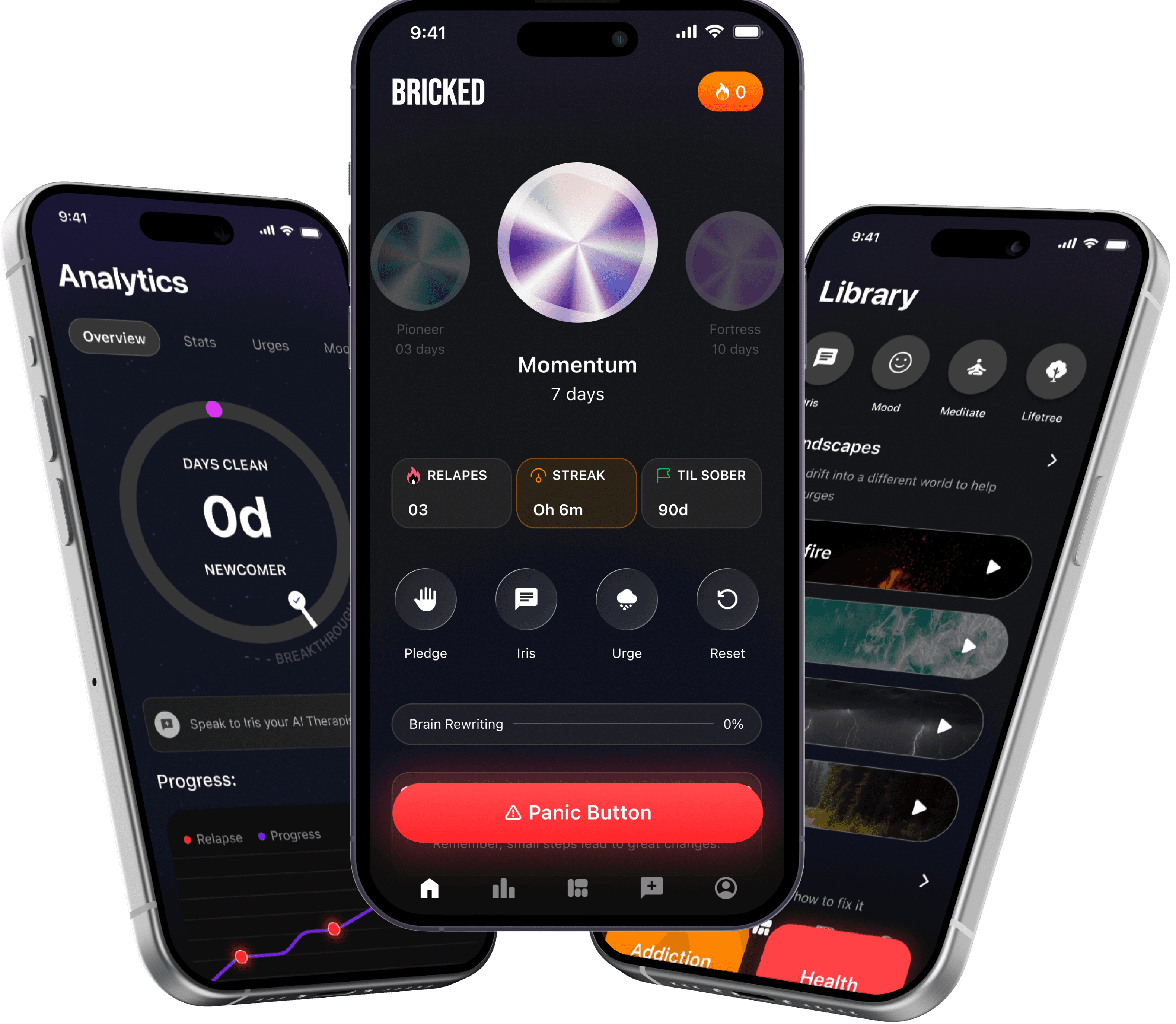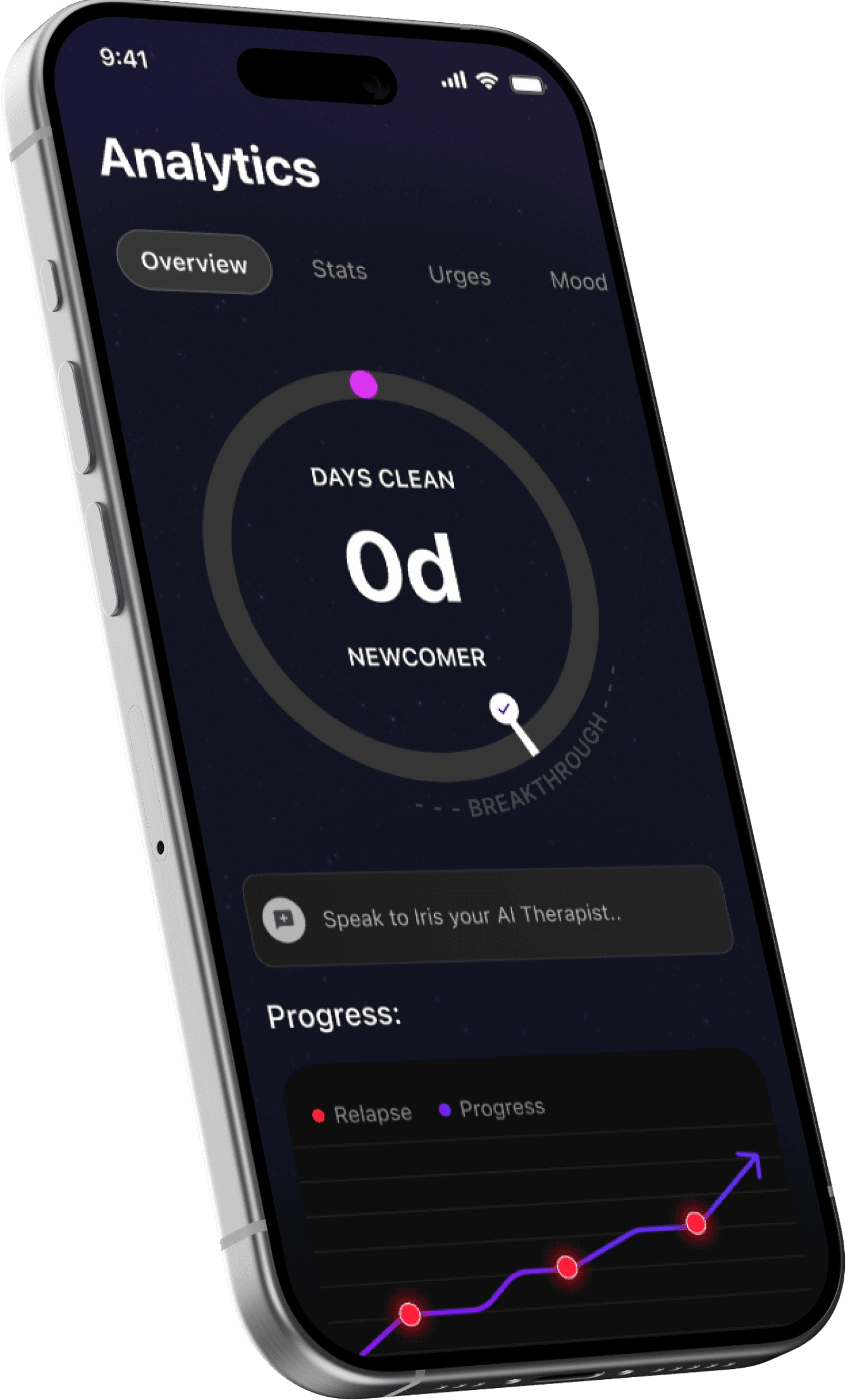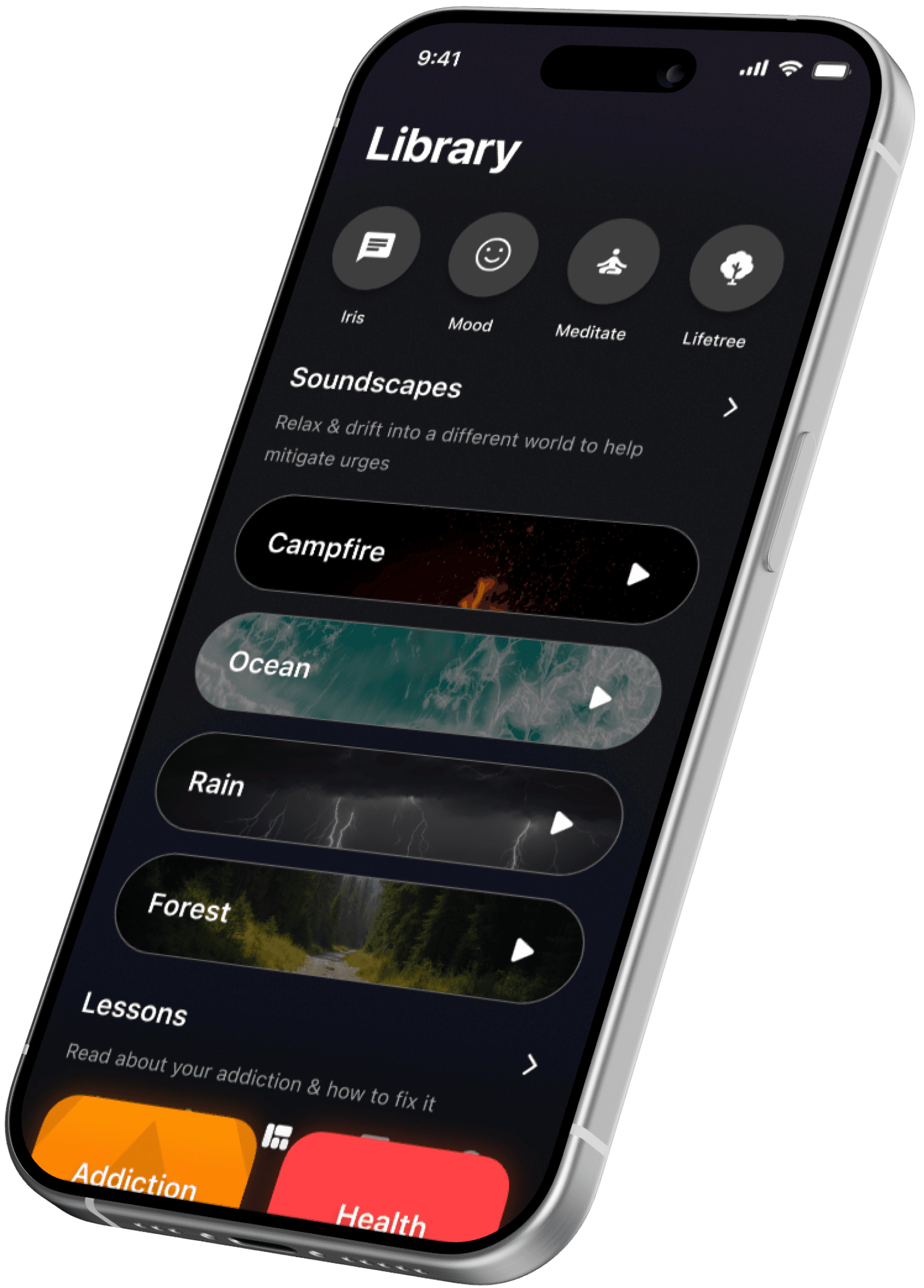
Meet BRICKED, the #1 app for quitting porn with all the tools needed to make the process easy.

Meet BRICKED, the #1 app for quitting porn with all the tools needed to make the process easy.
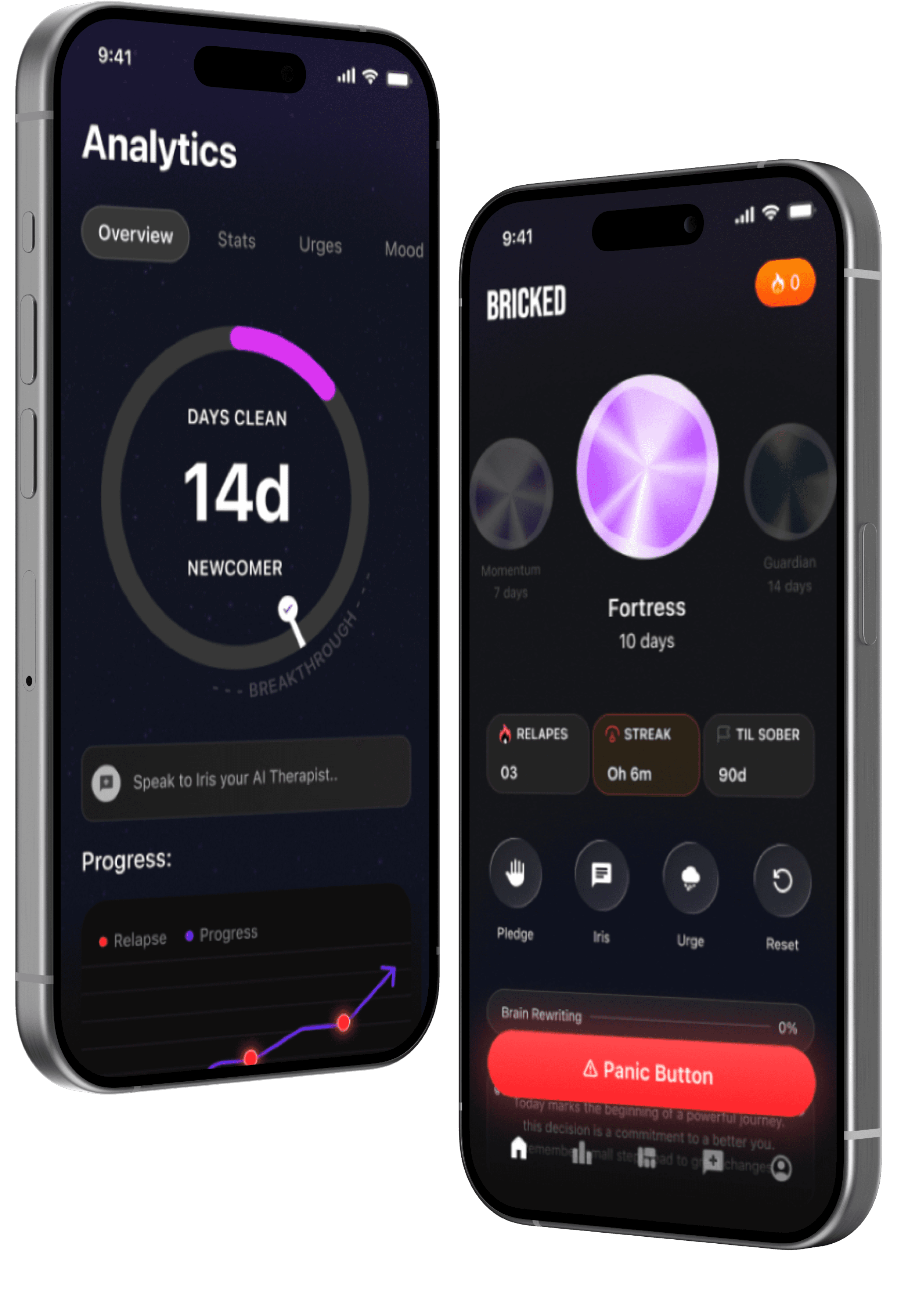
Nearly 1/3 of men deal with porn addiction, which can sap motivation, heighten anxiety, throw dopamine levels off balance, and contribute to sexual issues in younger men.
What Is BRICKED App?
Is BRICKED App Free?
How To Access BRICKED?
What Features Does BRICKED App Include?
What Does BRICKED Content Blocker Do?
What Does BRICKED AI Therapist Do?
What Does BRICKED Panic Button Do?

Feb 2, 2025
3 Min Read
Why Do I Masturbate So Much?

You signed up for a 30-day No Fap challenge hoping for a fresh start, yet urges still hit late at night, during work breaks, or whenever boredom and stress creep in. Asking Why do I masturbate so much? is a normal, honest question when porn, dopamine cycles, loneliness, anxiety, and habitual loops keep nudging you toward quick relief.
This guide breaks down seven common reasons behind frequent masturbation—from stress and boredom to porn use and compulsive patterns—and gives practical insight to help you understand your behavior and start making changes.
BRICKED’s quit porn program supports this process with simple daily tracking, trigger awareness, and tools designed to reduce porn use, teach healthier coping strategies, and help you regain control over urges.
Summary
Frequent masturbation usually stems from a mix of emotional and environmental triggers rather than just libido. Stress is a leading cue, with about 75 percent of people reporting it as a common trigger.
Boredom drives quick relief, with over 70 percent of people saying it increases how often they masturbate.
Conditioned cues from porn, suggestive media, and consistent routines create automatic stimulus-response loops, making urges predictable even without stronger desire or intention.
Relapse is common when relying on willpower alone. Around 60 percent of people attempting to quit masturbating relapse within the first week. Social support is critical, as over 75 percent of those who successfully quit report having a strong support system.
Simple, repeatable micro-strategies can interrupt urges quickly. Journaling at the first sign of an urge, for example, can reduce its intensity by roughly 50 percent before completing a single page.
BRICKED’s Quit Porn program tackles this by combining daily trigger logging, scheduled friction tools, and targeted support, helping people track patterns and practice effective alternative responses.
10 Common Triggers That Make You Masturbate More Than You Realize
The urge to masturbate frequently is rarely just about libido. It’s a cluster of emotional, environmental, and conditioned triggers that hijack the reward system, turning release into a reflex. Here are the ten biggest triggers, along with why they work, when they appear, and what keeps them strong.
Boredom fills empty time with easy dopamine
Idle minutes become a pipeline for quick pleasure. Without meaningful stimulation, the brain searches for activities that reliably spike dopamine, and habitual PMO fits perfectly. Over 70 percent of people report boredom increases masturbation frequency.Stress masquerades as desire
Cortisol spikes and tension create a craving for instant relief. Masturbation acts as a self-soothing shortcut. Around 60 percent of people say stress drives more frequent sexual behavior. The goal isn’t sex—it’s comfort.Loneliness substitutes fantasy for connection
Feeling disconnected after an argument, during nights alone, or following rejection triggers private loops of feeling seen or desired. This workaround becomes problematic when it replaces real intimacy efforts.Porn and cues train automatic responses
Thumbnails, clips, and suggestive content condition the brain to move from stimulus to action reflexively. The environment forms an automatic chain: see cue, arousal, seek release. Willpower fights the wrong battle if the learned loop remains active.Solitude removes friction
Being alone, late nights, or closed doors removes social constraints, creating more opportunities for habit expression. Habits strengthen fastest where friction is lowest.Routine turns desire into ritual
Repeating the same behavior at the same time, place, or device wires it into an automatic loop. The brain follows the path of least resistance, responding to cues rather than genuine arousal.Bedtime becomes a trigger
Late-night thoughts surface when distractions fade and cortisol drops. Sleep separation paired with release links the bedroom to predictable urges over time.Low self-worth drives emotional PMO
Porn and masturbation offer fantasy scenarios that temporarily fill gaps from rejection or insecurity. When used to soothe shame or loneliness, these urges are harder to address with rules alone.Novelty fuels escalation
Porn’s infinite novelty trains dopamine systems to expect constant newness. Frequency rises as the brain searches for the same intensity again and again.Biological cues ignite habit loops
Morning erections, hormonal spikes, friction, or tight clothing can trigger urges. These normal signals turn into full episodes when paired with conditioned loops.
Most people respond with willpower, blockers, or rigid schedules. These tactics feel immediate but carry hidden costs: shame cycles, circumvented blockers, and routines that fail to meet the emotional need.
BRICKED approaches the problem differently. By focusing on triggers instead of just behavior, it provides automated logging, scheduled friction tools, and therapist matching. This helps people identify patterns and replace conditioned loops with practical interventions.
Triggers don’t act alone - they interact and amplify each other. Labeling it as “too much” hides the real cause and keeps people stuck. Understanding this is just the first step; the next part reveals what most people overlook and why it matters.
6 Reasons Why You Masturbate So Much
Your brain learns to handle pressure the same way it learns any quick skill: by reinforcing the fastest route to relief. Over time, stress becomes the signal and masturbation the practiced response. That makes urges automatic and emotionally charged, not simply sexual.
How does a stress habit form so fast?
Stress floods the body with urgency, and the brain catalogs what calms it fastest. That memory trace links an internal state to a reliable outcome, making the response increasingly reflexive. Around 75 percent of people report stress as a key trigger. Physiologically, when the sympathetic nervous system stays activated, it seeks anything that quickly lowers the signal—PMO is one of the fastest options.Why does boredom feel so risky?
Idle time puts the brain into novelty-seeking mode, valuing immediate stimulation. About 60 percent of people say boredom drives more frequent masturbation. Even a few unstructured minutes become high-risk windows where the habit can run on autopilot.What changes in the nervous system?
Repeated PMO paired with stress rewires salience circuits, dulls tonic dopamine sensitivity, and strengthens cue-response loops in the basal ganglia. Ordinary pleasures feel weaker, while the habit itself becomes more efficient—like following a worn path through snow instead of exploring a new route.How does this affect real intimacy?
When emotional needs are outsourced to fantasy, partnered touch and closeness fade. In six-week coaching blocks focused on reducing porn exposure, many couples saw sensation and connection return once the conditioned escape was retrained. Emotional escape, not anatomy, drives much of the distancing people feel.What breaks when you rely on quick fixes?
Short-term solutions like late-night scrolling or postponing difficult conversations feel harmless but carry hidden costs: avoidance strengthens, social ties thin, and habits consume more private time. Coping starts to feel mandatory, not optional.How can you interrupt the loop without relying on willpower?
Replace one automatic path with an alternative chain executed in the same moments you used to reach for PMO. Effective strategies alter the internal signal: immediate breathwork, grounding exercises, or a five-minute physical task can shift autonomic tone. Short, repeatable micro-routines allow enough pause to choose differently.
Most people default to ad hoc fixes because they feel familiar and easy. The downside is these only mask the underlying training. BRICKED addresses both friction and coaching by combining automated content blocking, micro-meditations, progress tracking, and AI-guided support. This weakens the cue and teaches competing responses, turning episodic resistance into sustainable habit change.
BRICKED is a science-based, actionable way to quit porn permanently. With tools like a content blocker, streak guard, AI therapist, and guided recovery journal, it keeps your 28-day reboot on track and helps you build lasting control.
The pattern above seems clear, but the real obstacle - the part that makes stopping feel nearly impossible - is what most people never anticipate.
How to Stop Masturbation (A Proven Step-by-Step Plan That Actually Works)
Willpower rarely works because habits are neural circuits, not moral failings. You need a repeatable system that tracks the loop, interrupts it at the moment of decision, and gives the brain a believable alternative reward.
Track with BRICKED
Logging urges turns noise into a signal. Record the time, device, preceding emotion, and how long the urge lasted before acting. Track for two weeks to get concrete targets instead of vague promises. Keep the log so small it cannot be skipped, a single tap that takes ten seconds.Remove porn before removing masturbation
Lower visual cues to reduce urge frequency and intensity. Use layered defenses such as content blockers, deleting saved files, adjusting social feeds, and setting delayed account recovery. The goal is friction, not perfection, so urges arrive with less force and give a chance to practice a new response.Delay every urge by five minutes
Treat this as a training drill. Lock the screen, breathe for a minute, set a four-minute timer, then do a short physical task. Minor delays prove urges are waves that fade if you don’t act immediately.Replace release with physical stimulation
Use immediate, intense movement as an alternative: push-ups, bodyweight squats, or a sixty-second cold shower. These provide real endorphin and dopamine boosts, interrupt the sensory loop, and feel like a legitimate substitute.Create a trigger-proof environment
Change the architecture of temptation. Move chargers out of the bedroom, lock browser settings behind a separate account, and set strict nighttime device rules. Even a single extra step can halve impulse completions.Fix loneliness with scheduled connection
Loneliness is a predictable trigger. Book short social check-ins, join a live activity weekly, or schedule a standing call with a friend. Real contact substitutes fantasy-based consolation.Reduce idle time, especially at night
Turn high-risk windows into structured routines: dim lights, shower, journal, then read or sleep. Make the hour between 10 PM and midnight a sequence of small, tested behaviors.Journal urges instead of acting on them
Write a short entry at the first sign of wanting to act. Note what happened, what emotion arrived, and what physical sensations you felt. Journaling makes urges visible and often reduces intensity by half before finishing a page.Build discipline with tiny habits
Start with one repeatable micro-habit daily, such as one minute after brushing teeth. Stack it on an existing routine and celebrate consistency over intensity. Small wins restore confidence and rebalance the brain’s reward system.Treat slips as data, not failure
Relapse shows where the system broke, not that you did. Record time, trigger, emotion, context, and one change for next time. Converting shame into a troubleshooting log turns recovery into a skill.
Immediate relapse planning matters because motivation alone is fragile. Studies show 60 percent of people trying to quit masturbation relapse within the first week, while over 75 percent of successful quitters report strong social support. Accountability is a core element, not optional.
Most people rely on willpower and scattered tricks. That works briefly but eventually fractures: streaks die, shame rises, and behavior returns. BRICKED changes that pattern by combining automated trigger logging, content blocking, short guided interventions, and an AI therapist that turns slips into concrete next steps.
Think of habit change like retraining a pathway through a city. Blocking one alley and widening another takes repeated rerouting, signage, and practice. The new path must become easier to travel than the old one until it becomes automatic.
BRICKED is a science-based, actionable way to quit porn forever. It combines tools and support features like an AI therapist, community leaderboards, meditation exercises, and progress tracking. The 28-day challenge provides structured support to rebuild habits and make relapse prevention measurable.
Results back this approach. In Tactics Plus, over 90 percent of participants significantly reduced porn consumption during the program, and 75 percent maintained progress six months later. Structured guidance and community support make lasting change achievable.